
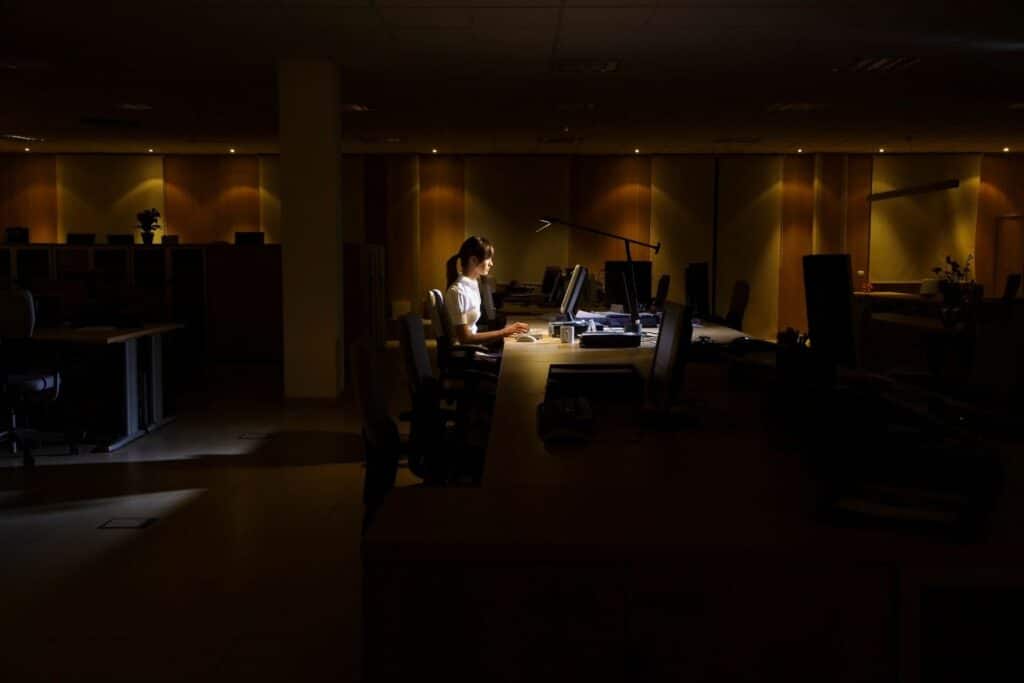
While solitude can be a rejuvenating choice, working alone presents a complex challenge. It requires personally managing an entire work system—providing the structure, feedback, and motivation usually found in a traditional office.
This distinction is often missed. Many remote workers struggle not from a lack of discipline, but because their environment lacks essential cognitive signals for steady effectiveness.
We will explore the gap between solitude and solo work, the risks of isolation, and why coworking at Freelance York in Dallastown offers a “middle path” balancing independence with professional structure.
Being Alone: A Choice That Can Restore You
“Being alone” is primarily a physical state characterized by the absence of others, which can often be beneficial. When solitude is intentional, it fosters emotional regulation, creativity, and deep reflection by minimizing external distractions. This quiet environment allows your focus to stabilize, providing the necessary space to learn, plan, write, or simply recharge.
But solitude works best when it has three features:
- Intention (you know why you’re doing it)
- Boundaries (it’s time-limited, not endless)
- A return path (you reconnect with people and the world afterward)
In other words, being alone isn’t automatically a problem. It becomes a problem when it stops being a choice.
Working Alone: A System With Hidden Requirements
Working alone is not just “solitude while you work.” It’s a daily operating system—especially when home becomes your primary (or only) workspace. When you work alone long enough, you’re not only doing the job. You’re also acting as:
- the manager (priorities, standards, decisions)
- the scheduler (start times, breaks, stopping points)
- the accountability partner (staying on track without external cues)
- the quality control department (“Is this good enough?”)
- the culture (energy, momentum, identity)
Standard office environments inherently provide a variety of these structural supports. Deadlines carry more weight when you observe others in motion, and personal progress feels more attainable when surrounded by people focused on their own objectives. Brief interactions—a casual “how is it going,” a quick “well done,” or a short chat—serve as vital reality checks that maintain mental clarity and keep stress at a sustainable level.
When you work alone, those small supports disappear. And the absence doesn’t always show up as obvious loneliness. Often, it shows up as friction.
The Real Difference: Solitude vs. Isolation
A deeper way to frame this is solitude vs. isolation.
- Solitude tends to restore you.
- Isolation tends to drain you.
Isolation isn’t simply “no people around.” It’s a lack of connection, reflection, and shared momentum over time. That’s why you can be physically alone and feel great, or be around people and still feel isolated.
A practical checkpoint:
- After healthy solitude, you usually feel calmer and clearer.
- After isolation, you often feel foggy, restless, or oddly depleted.
What Working Alone Can Do to Your Focus, Mood, and Confidence
Here’s what many independent workers notice first—without realizing it’s connected to working alone:
1) Decision fatigue and “drift”
The structure of a home-based workday can easily unravel. Remote professionals are often bogged down by a continuous stream of micro-decisions: determining the right time to start, deciding when to engage with email, or weighing whether to take a break or delay a project.
This constant mental processing increases your cognitive load. If left unchecked, it leads to a phenomenon known as “drift,” where you remain constantly occupied throughout the day yet fail to achieve meaningful progress or true effectiveness.
2) Boundary erosion
When your workspace is also your living space, the lines between work and life often blur. You might find yourself checking your inbox late into the evening or leaving your computer open just in case something arises, leading to a state of constant, tiring semi-productivity.
3) Overthinking due to missing feedback
When there’s no external input, your brain tries to fill the gap. That’s how overthinking grows:
- “Maybe my work isn’t that good.”
- “I’m behind.”
- “Should I change everything?”
This isn’t weakness—it’s what happens when your mind becomes the only mirror you have.
4) A shrinking professional world
Prolonged isolation in your professional life can lead to a constricted outlook. Without the regular occurrence of informal interactions with peers, you miss out on the subtle cues that reassure you that your hurdles are typical and manageable. Consequently, your sense of professional self may begin to dim, regardless of the actual quality of your output.
Why Coworking Works (Even If You’re Not “A People Person”)
Coworking isn’t about forcing you to network or be social all day. Good coworking spaces are powerful because they restore what solo work often removes: context.
A dedicated work environment (clear cues)
Stepping into a workspace designed specifically for professional tasks provides your brain with a definitive cue: focus begins here. This clarity minimizes the cognitive strain of toggling between your personal and professional personas, a primary cause of burnout for those working remotely.
Ambient accountability (low-pressure momentum)
You don’t need supervision—you need an environment that supports action. There’s a well-known effect where people perform better simply because others are nearby doing the same thing. It’s not pressure; it’s activation.
The “middle layer” of connection
The “middle layer” of interaction—brief greetings, recognizable faces, and casual break-time conversations—is what most individuals actually require rather than constant engagement. This level of connection effectively wards off isolation while preserving your social energy.
Viewing coworking as “professional vitamin D” is a helpful perspective. You don’t have to immerse yourself in it for ten hours every day; simply having regular access to a more supportive work setting can be immensely beneficial.
Where Freelance York Fits In
If you’re in the Dallastown area, Freelance York offers a practical, flexible coworking solution that supports focused work and restores structure—without a corporate vibe. Members have access to essentials like high-speed internet and printing, plus space that helps your day feel more intentional and grounded.
And you don’t have to overhaul your life to benefit. Freelance York’s memberships make it easy to start small and build a rhythm:
- Drop In: $30
- Basic Day: $100/month
- Entrepreneur: $175/month
- Dedicated Desk: $350/month
Even one or two coworking days per week can improve consistency, strengthen boundaries, and make work feel lighter—because you’re no longer running the entire system alone.
Conclusion
Solitude can provide rejuvenation, and working solo can be highly efficient. However, if working in isolation becomes your permanent status, it can lead to mounting decision fatigue, distorted work-life boundaries, a tendency to overthink, and a fading sense of professional drive.
Coworking provides a valuable alternative: combining personal autonomy with a supportive environment, structured focus, and social interaction that remains optional. For those seeking a more sustainable, clear, and balanced professional life, joining Freelance York is a straightforward local choice that can have a significant impact.