
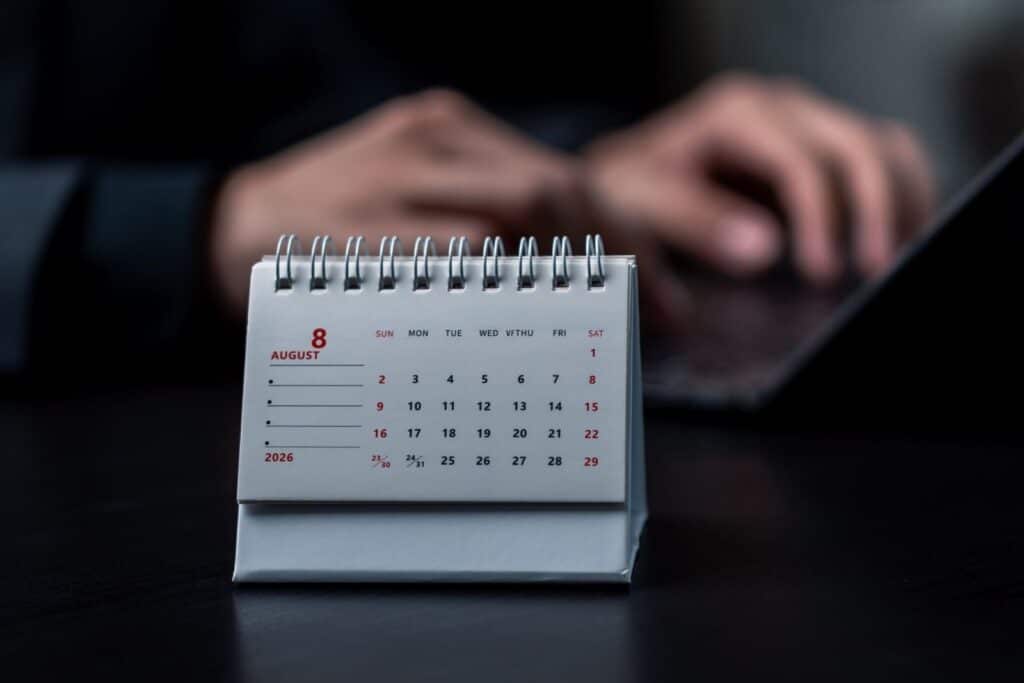
August is often seen as a transitional month: Missing both the initial drive of a new year and the firm framework of autumn. With erratic schedules and relaxed routines, staying productive can become a challenge. However, this unpredictability makes August the perfect time to evaluate your workspace.
This evaluation isn’t about making drastic modifications. Instead, the final weeks of summer highlight the true foundational elements of your professional life: your surroundings, your stamina, and the operational systems that either alleviate complications or subtly intensify them.
August is a “gap month,” and gap months tell the truth
An optimized structure can help you push through an unfavorable work setup. Yet, once routines relax (which is typical in August), the vulnerabilities become clear. You start noticing patterns you’ve been tolerating for months:
- It takes too long to “get started” each day
- You’re productive sometimes, but not consistently
- One interruption turns into 20 minutes of mental recovery
- Meetings feel awkward because you’re managing noise, background, or privacy
- Work bleeds into personal time because there’s no real boundary
This isn’t a character flaw. It’s feedback. And it’s useful feedback—because you can act on it.
The overlooked productivity lever: context cues
While typical advice emphasizes enhancing your habits, your physical surroundings actually serve as a hidden trigger for behavior.
Because the brain links specific locations to particular actions—like connecting a couch to relaxation or a kitchen table to managing household tasks—working in an environment filled with domestic distractions, family members, or entertainment forces your focus to constantly compete. Rather than just focusing on your tasks, you end up exhausting energy on managing your environment.
Consequently, altering your workspace can spark a swifter transformation than merely updating your task list. Opting for a dedicated professional setting lowers the initial friction of getting to work by minimizing daily choices, context switching, and the urge to lose focus.
August is an energy month as much as a time-management month
Late summer isn’t only mentally disruptive—it’s physically taxing. Heat can affect sleep. Sleep affects focus. Focus affects decision-making. By mid-afternoon, many people aren’t battling workload; they’re battling low energy plus a workspace that makes everything harder.
Standard willpower guidance falls short here. Rather than striving to “push harder” when your personal energy is depleted, the solution lies in designing an environment that minimizes energy drain.
A work-optimized environment is effective because it minimizes the minor discomforts and small disruptions that deplete your energy. It eliminates obstacles such as poor posture, unstable internet, distracting noise, and the persistent visual reminders of other tasks that pull your attention away from work.
The real cost of “free” workspaces shows up in August
Working from home can be a great option. But by August, many freelancers and remote workers start feeling a mid-year pressure that sounds like:
- “Why am I so busy but not moving forward?”
- “Why does everything take longer than it should?”
- “Why does deep work feel so rare lately?”
Often, the issue isn’t talent or effort. It’s operational drag—small frictions that quietly tax throughput (your ability to produce quality work smoothly). Home can introduce hidden costs:
- Time fragmentation from interruptions and context switching
- Decision fatigue from constantly adjusting your setup
- Limited resources (printing, meeting space, reliable quiet)
- Blurred boundaries that make you feel always-on
- Isolation that reduces momentum more than you realize
If you feel this most in August, that’s normal. It’s the month where routines soften and the “invisible costs” become visible.
Why coworking fits August especially well
Coworking works because it’s not a motivational hack, it’s environmental design. You step into a space built for work, and your day becomes simpler.
A good coworking space gives you:
- a reliable, professional work setting
- fewer interruptions you have to manage
- infrastructure that removes friction (strong internet, printing, meeting-friendly areas)
- a clearer boundary between work mode and home mode
- “ambient community”—not forced networking, just the energy of others working too
This final point is frequently undervalued. Rather than extra social gatherings, what many professionals actually require is greater momentum. Immersing yourself in an environment where others are actively focused makes it far easier to find your own drive—particularly during August, a month when routines often feel disconnected.
At Freelance York in Dallastown, coworking is positioned to be exactly that kind of practical upgrade: a consistent place to focus, meet, and build a better weekly rhythm without having to create an office from scratch at home.
Use August as a test lab: a simple 2-week workspace reset
If you want to make this actionable (without overhauling your life), treat August like a testing window.
Week 1: Diagnose
- Track when you do your best work (time of day + task type)
- Identify your most common interruptions
- Notice what you avoid because your environment makes it harder (calls, deep work, planning)
- Define your “minimum viable workspace” (quiet, desk, meeting space, printing, etc.)
Week 2: Test
- Work 2–4 days from a coworking space
- Schedule one deep-work block (90–120 minutes) each test day
- Schedule at least one call or meeting to evaluate professionalism and ease
- Measure effort, not just output: Did work feel lighter? Did you end the day less drained?
The point isn’t to be productive for a day. It’s to find a setup you can repeat when fall arrives.
Don’t wait for September to force a reset
September brings structure, whether you plan for it or not: new routines, new deadlines, new expectations. If your workspace has been “good enough,” September is when good enough starts to feel expensive.
August lets you choose your reset instead of having it chosen for you. It’s the calm before the ramp-up—the best time to upgrade the container your work happens in.
Rethinking your workspace is the simplest, highest-leverage move you can make to ensure the upcoming fall feels focused, professional, and composed. Opting for coworking provides far more than a mere shift in environment; for many, it marks the definitive line between a chaotic season and a steady, structured one.